
The Sensory Systems and Primitive Reflexes: Why Movement Matters
Written by Helen Battelley
In this article, Helen Battelley explains how primitive reflexes and the sensory systems lay the foundations for the way young children move, learn and regulate their emotions.
When we think about how children learn to move, communicate, concentrate and engage with the world around them, we often focus on what we can see: a child running, climbing, balancing, drawing or playing a game with their friends.
But underneath every movement is a fascinating network of sensory systems helping the child to understand where their body is, how it's moving and how to respond to the world around them.
Long before a child can sit still, hold a pencil, follow instructions or engage in a group activity, their brain and body are receiving and processing a constant stream of sensory information. This sensory processing helps children develop postural control, coordination, body awareness, balance, attention and emotional regulation. In other words, movement and sensory development are not separate from learning - they are foundational.
More than the 5 senses
Most of us grew up learning about 5 senses: sight, hearing, taste, smell and touch. While these are important, there are additional sensory systems that are particularly significant in early childhood.
The vestibular system
The vestibular system (our internal spirit level), located within the inner ear, provides information about movement, balance, gravity and changes in head position. Every time a child spins, swings, rolls, jumps, climbs or changes direction, the vestibular system is involved.
The proprioceptive system
The proprioceptive system (our internal GPS) provides information from muscles and joints about where the body is and how it is moving. It helps a child judge how much force to use when pushing a toy, throwing a ball, climbing or picking up an object. 'Heavy' activities involving pushing, pulling, carrying, lifting and weight-bearing can provide rich proprioceptive experiences.
The interoceptive system
The interoceptive system is our internal body-sensing system, helping children notice and interpret signals from within their bodies. It tells us when we are hungry, thirsty, tired, too hot or cold, need the toilet, or when our heart is beating faster after running.
Interoception also contributes to emotional awareness and self-regulation, as children gradually learn to recognise how physical sensations relate to feelings and needs.
Through everyday experiences such as active 'all weather' play, rest, eating, drinking, and noticing changes in their heartbeat, children develop a growing awareness of their internal world.
Primitive reflexes: the beginnings of movement
Primitive reflexes are automatic movement responses that emerge during pregnancy or around birth. They support early survival and provide important foundations for development. They represent nervous system reactions caused by physical stimulation of the body's sensory receptors.
The Moro Reflex, for example, is an infant startle response involving a rapid extension and opening of the arms followed by flexion. The palmar grasp reflex causes a baby to close their fingers around an object placed in their palm.
Other early reflexes support feeding, postural development, language and early movement.
As the brain and nervous system mature, these early reflex responses typically become less dominant and increasingly integrated into more purposeful, voluntary movement (postural reflexes). This process is part of the child's developing motor control.
It is important, however, not to assume that every difficulty with movement, attention or behaviour is caused by a retained primitive reflex. Development is complex, and children can experience challenges for many different reasons.
Where there are significant or persistent concerns, educators should work with parents and appropriate health or developmental professionals rather than attempting to diagnose or treat reflexes themselves.
What we can do is provide children with plentiful opportunities for the types of movement that support healthy neurological and physical development, particularly floor play.
Movement is the developmental work
Rolling, reaching, crawling, climbing, rocking, balancing, jumping, pushing and pulling can sometimes be viewed simply as physical activity. But for a young child, these experiences are also opportunities to develop body awareness, coordination, spatial awareness, postural control and motor planning.
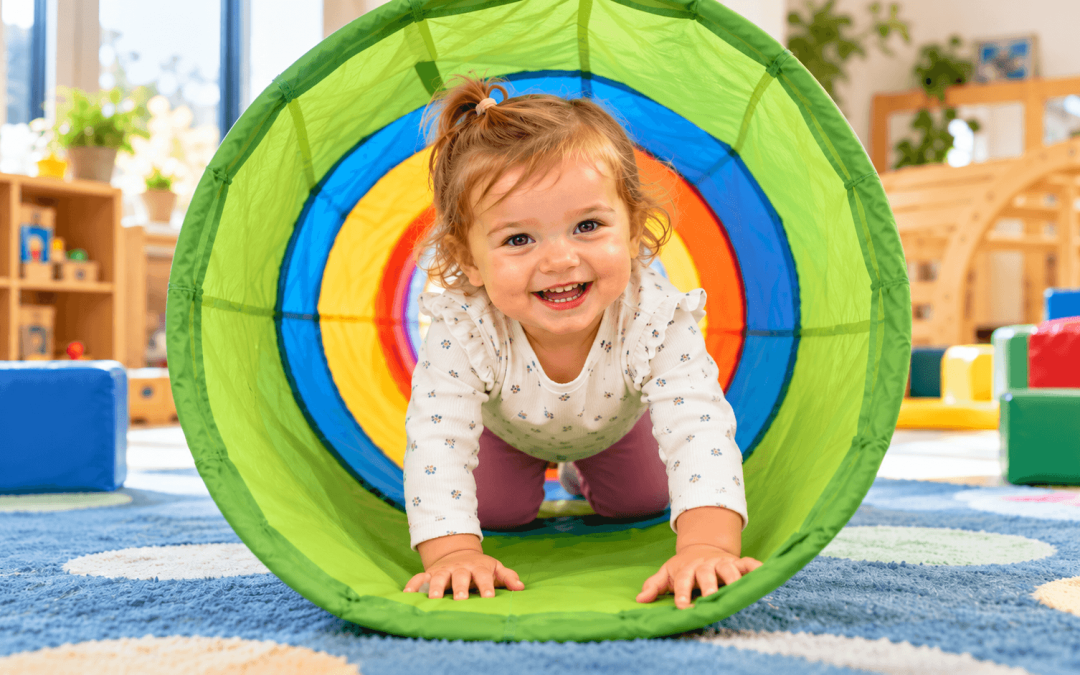
Consider a child crawling through a tunnel - they have to coordinate their arms and legs, judge the available space, orientate themselves, adjust their body position and decide where to move next.
They are also processing sensory information from their hands, knees, muscles, joints and eyes, and from their proprioceptive and vestibular systems.
When children have regular opportunities to move in varied ways, they are building an increasingly sophisticated understanding of their bodies and their physical environment.
These experiences provide foundations for later tasks such as sitting comfortably at a table, using tools, managing clothing, handwriting, toileting, participating in PE and navigating the classroom and playground.
What might sensory needs look like?
In an early years setting, educators may notice children who seem to be constantly on the move, repeatedly crashing into objects, seeking Roly Poly play or finding it difficult to remain seated. Others may avoid messy play, dislike particular textures, become distressed by unexpected touch or appear uncomfortable in busy environments.
These behaviours can be interpreted quickly as 'attention seeking', 'poor behaviour' or simply 'not listening'. Sometimes, however, they may reflect the way an individual child is experiencing and responding to sensory information.
A child who seeks movement may be looking for additional opportunities to regulate their sensory system. A child who avoids certain textures may be experiencing tactile sensitivity.
A child who appears to need considerable physical effort before they can settle may benefit from opportunities to push, pull, carry or climb.
This doesn't mean that every behaviour has a sensory explanation. It means that we should become curious before we become corrective.
Instead of asking, 'How do I stop this behaviour?', we might ask:
- 'What is this child communicating through their behaviour?'
- 'What sensory or movement experience might they be seeking or avoiding?'
- 'How can I adapt the environment or provide an appropriate movement opportunity?'
This small shift in perspective can make a significant difference to how we respond to children.
Creating sensory-rich environments
Supporting children's sensory development doesn't require expensive specialist equipment. In fact, some of the most valuable experiences are already available in high-quality early years provision.
Think about opportunities to:
- crawl through tunnels, cardboard boxes and under tables
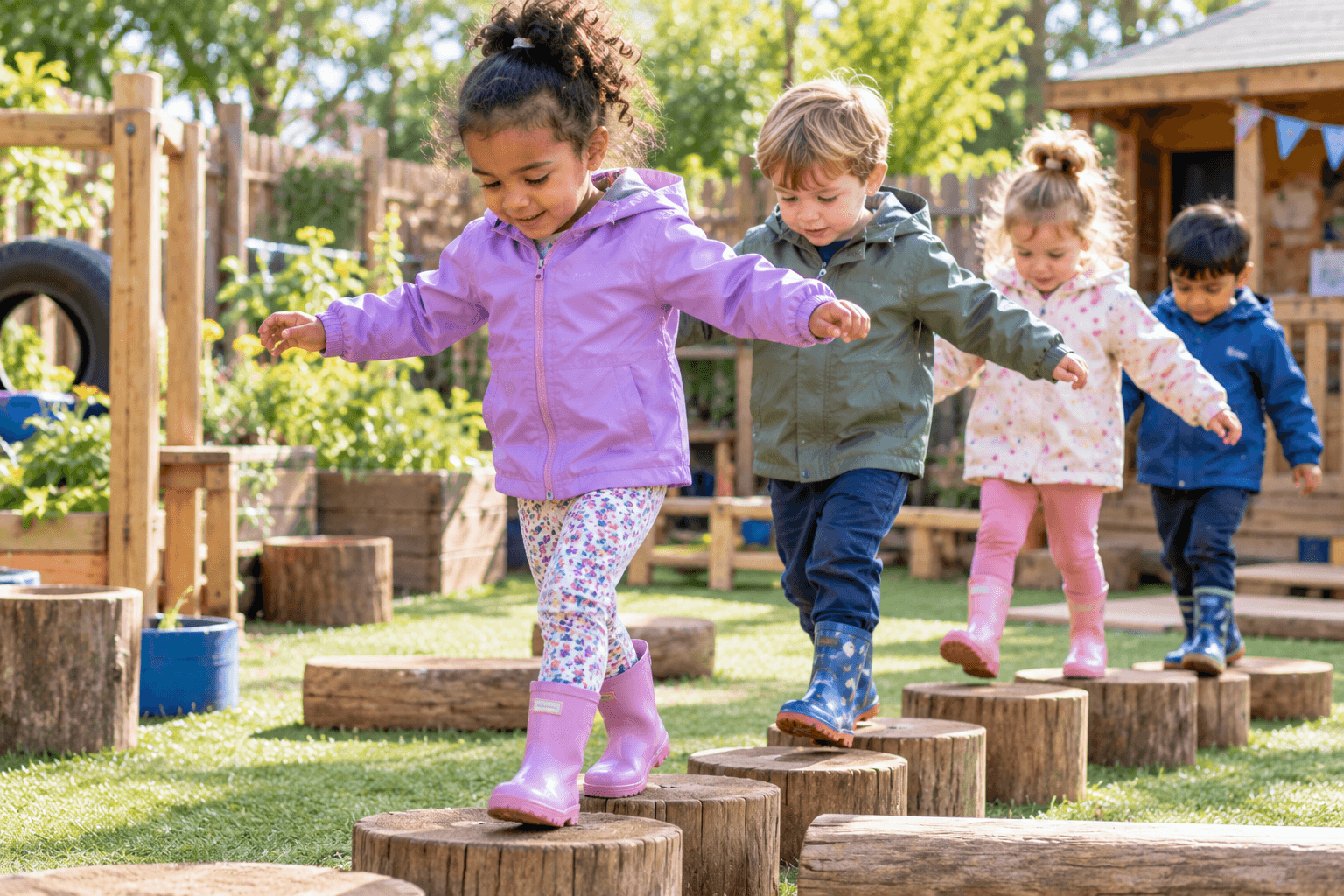
- climb, balance and negotiate obstacles
- roll, spin and rock
- jump and land
- push and pull heavy objects safely
- carry equipment and resources
- hang, reach and stretch
- explore sand, water, mud and playdough
- walk across different surfaces
- move to music and rhythm
- change speed, direction and level
- participate in outdoor adventurous play
- include visually stimulating resources and scents
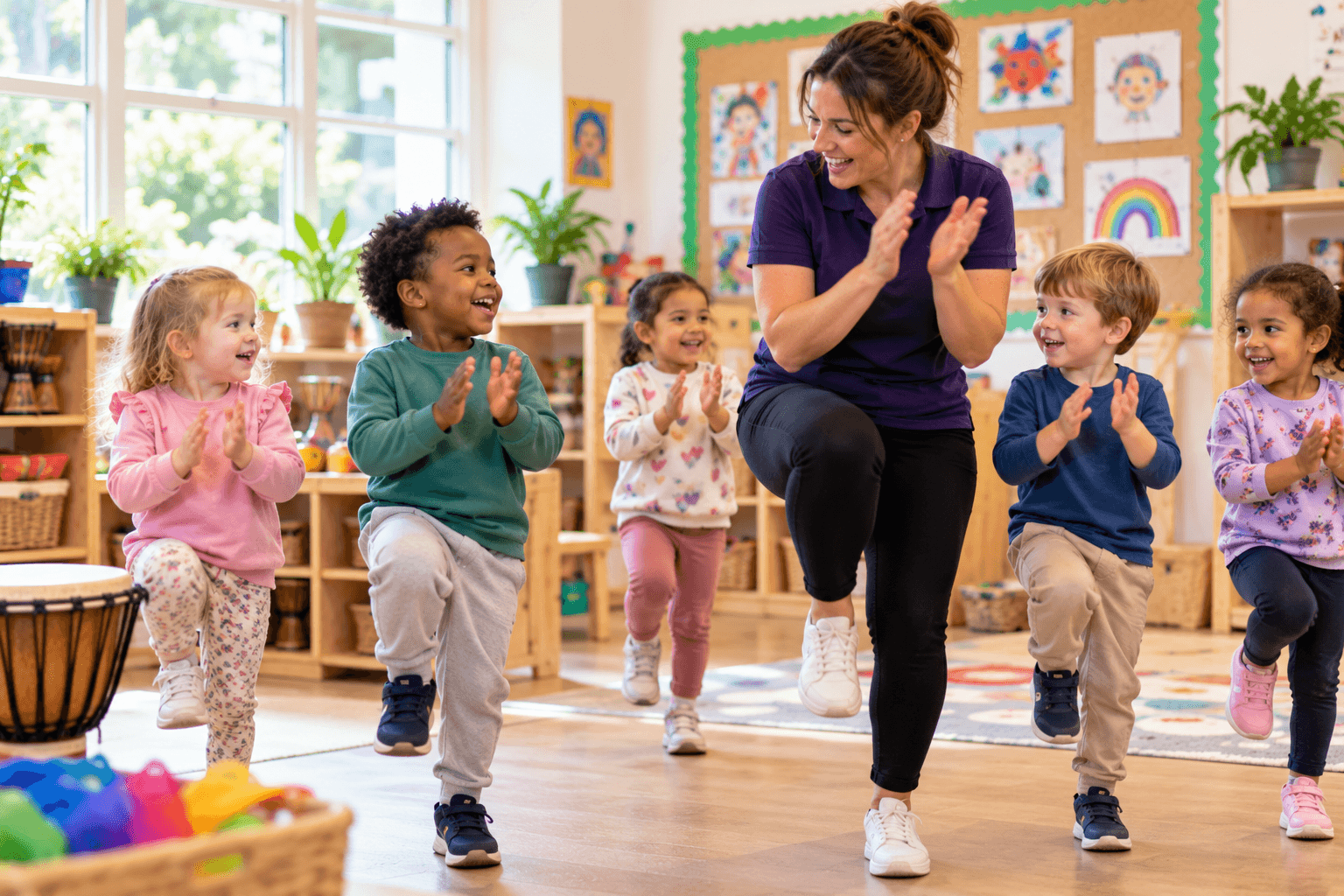
Music can be particularly powerful. Rhythm provides children with opportunities to practise timing, sequencing, anticipation and coordination. Clapping, marching, jumping to a beat, copying movement patterns and responding to changes in tempo all bring together auditory, visual, vestibular and proprioceptive information.
From movement to learning
One of the most important messages for educators and parents is that physical development should not be viewed as something that happens before learning begins. Physical development is part of learning and underpins all the other areas of learning and development set out in the EYFS statutory framework.
This is particularly important when we think about school readiness. Being 'ready for school' isn't simply about knowing letters and numbers. Children also need to be able to manage their bodies, navigate physical spaces, communicate, regulate their emotions, participate in social experiences and engage with learning.
Supporting primitive reflexes and sensory development in your setting
Want your team to feel more confident spotting sensory needs, supporting primitive reflexes through everyday movement and planning rich physical development? Our childcare courses help practitioners build exactly this kind of knowledge. Get in touch with our friendly team or call us on 0800 002 9242 to find out more, and explore more practice ideas on the Parenta blog.

Discover more: About the Author
Other Articles:
Physical Development: A Child’s Ultimate Foundation for Learning
Baby Music and Sensory Play
Benefits of Music Play for Babies and Toddlers
