
The Moving Tree: What Real Creativity in Early Years Looks Like
Creativity in early years settings rarely looks like a finished performance; it often starts in a small, unplanned moment, like this one:
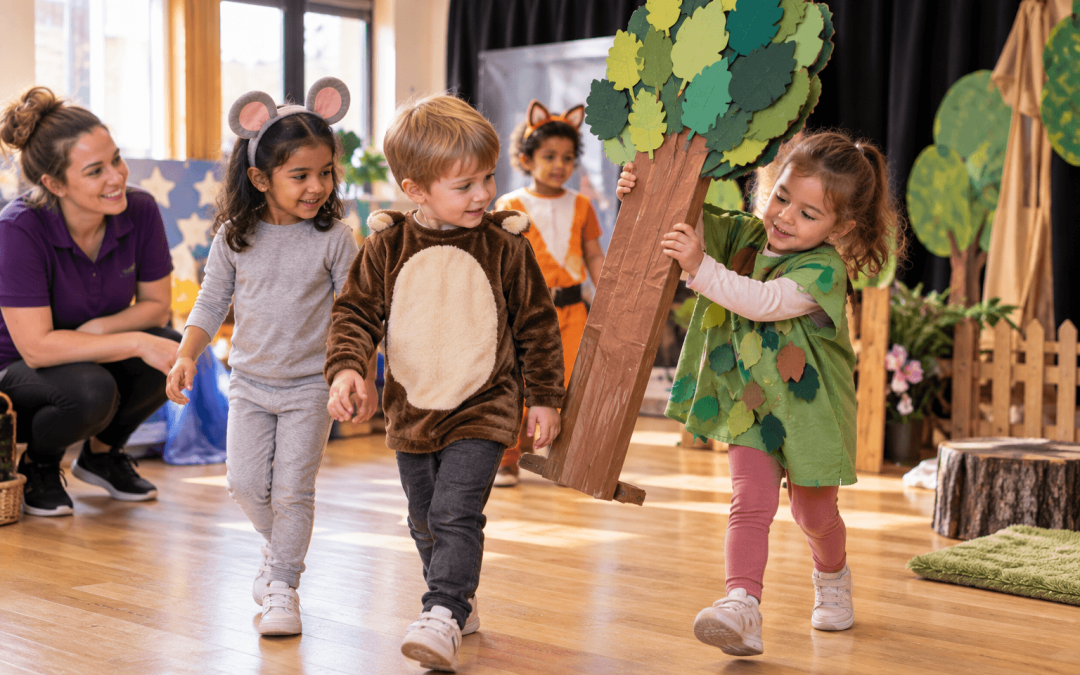
Imagine a group of children preparing a short play. Some have speaking parts. One child has been given a tree to hold at the side of the scene.
During a rehearsal, the tree begins to move. It leans across the path the other characters were meant to take. One child walks around it. Another stops: how are they supposed to get through?
Before correcting the movement, the adult asks what the child is trying out. “The tree wants to come with them”, the child explains. What looked like a misplaced prop is now a proposal for the story.
Perhaps the tree has given the play a better moment. Perhaps the new route makes the scene difficult for another child. Either way, the idea deserves more than a quick correction. The child holding the tree has done something creative with a role that appeared to offer little choice.
A performance may be the reason this group came together, but it is not the only place their creativity can be found.
A role is not the same as a voice
When we plan a play, we often work hard to give every child a part. That matters, particularly when some are quicker than others to volunteer. But being present in a performance does not necessarily mean having influence over it.
One child may have several lines and still spend the rehearsals following instructions. Another may have no lines but change how the group understands a scene. The tree raises an awkward, useful question: which children are helping to create the work, and which are mainly carrying out a plan made for them?
There is no simple answer. A shared production needs agreements. Other children have ideas and expectations too. If the moving tree blocks a carefully practised dance, accepting the change without discussion would ignore their contribution. If the adult moves it back immediately, the group loses the chance to consider an idea it did not expect.
The adult's task is to help the children work with that tension. “Shall we try it and see what happens?” may be more useful than either an instant yes or an instant no. They might discover that the moving tree makes the scene funny, creates a surprise or gives another character a reason to stop. Exploring these possibilities helps children make artistic decisions: how should this moment feel, and what could help the audience understand it?
Even a suggestion that does not reach the final performance can be taken seriously.
What good guidance makes possible
Supporting creativity in early years like this depends on what adults bring to the moment too.
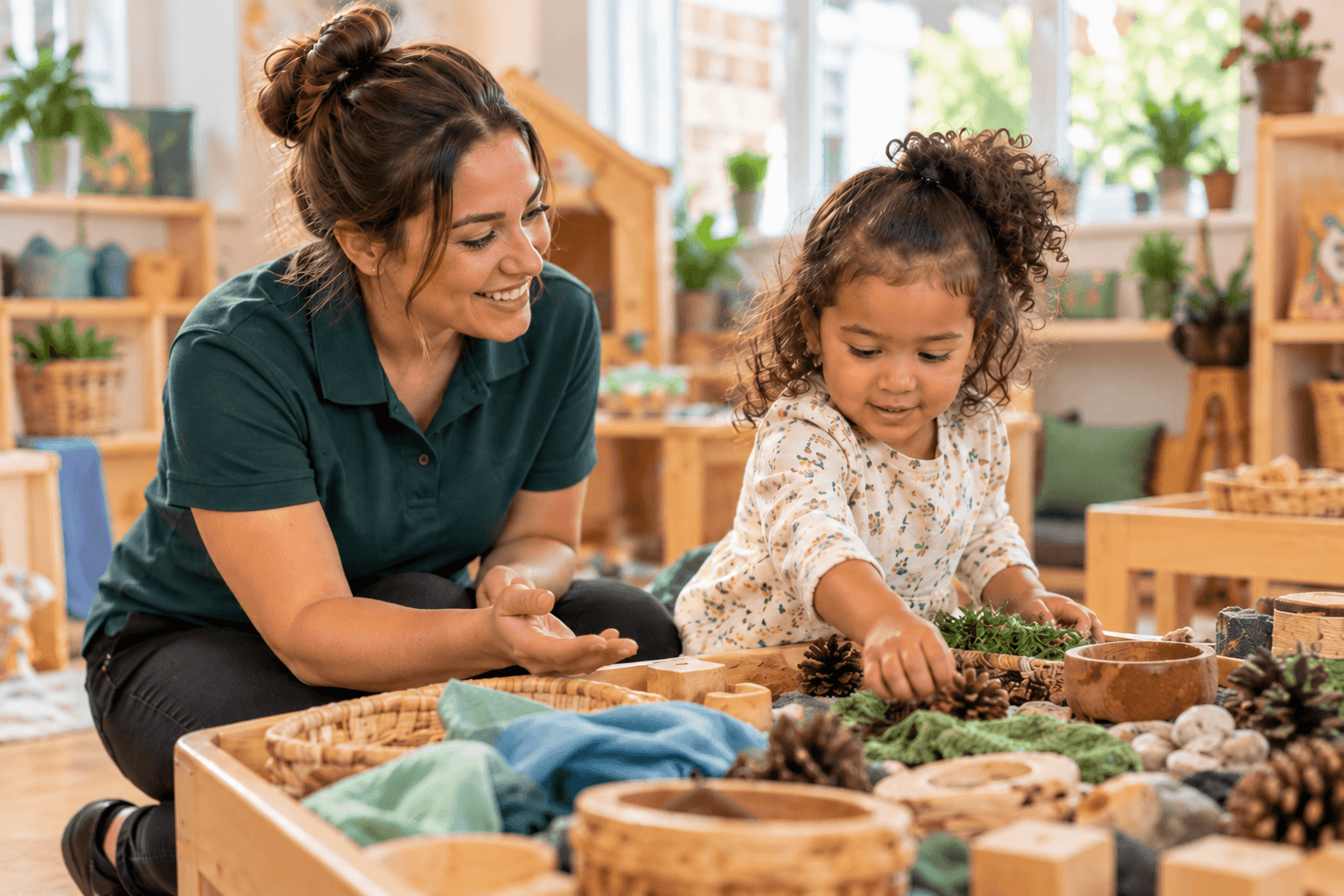
Children do not have to invent everything alone. Their possibilities grow when educators introduce them to stories, dramatic techniques, music, movement and ways of using materials. A child who has learned how to change their posture, use a prop or hold a pause has more choices when shaping a character.
The adult also holds parts of the work that children cannot reasonably be expected to manage alone: time, safety, the needs of the group and the purpose of the experience. A rehearsal sometimes needs to move forward. A child's proposal can be heard without requiring the whole plan to be rewritten.
We can show children how to make a shadow larger, help them hear a change in rhythm or ask what a character might do next. Then we watch what they make of that knowledge. Teaching gives them something to work with; it need not prescribe everything they do.
In the scene with the tree, the adult might suggest testing two versions. First, the tree stays where the group placed it. Then it moves. The children can see what changes for the other characters and decide which version tells their story more clearly. Their choice is informed by experience rather than made to please the adult.
The arts make different contributions visible
Drama is only one way creativity in early years becomes visible.
Drama brings this question into focus because we can see children shaping a shared story. Other art forms offer different possibilities.
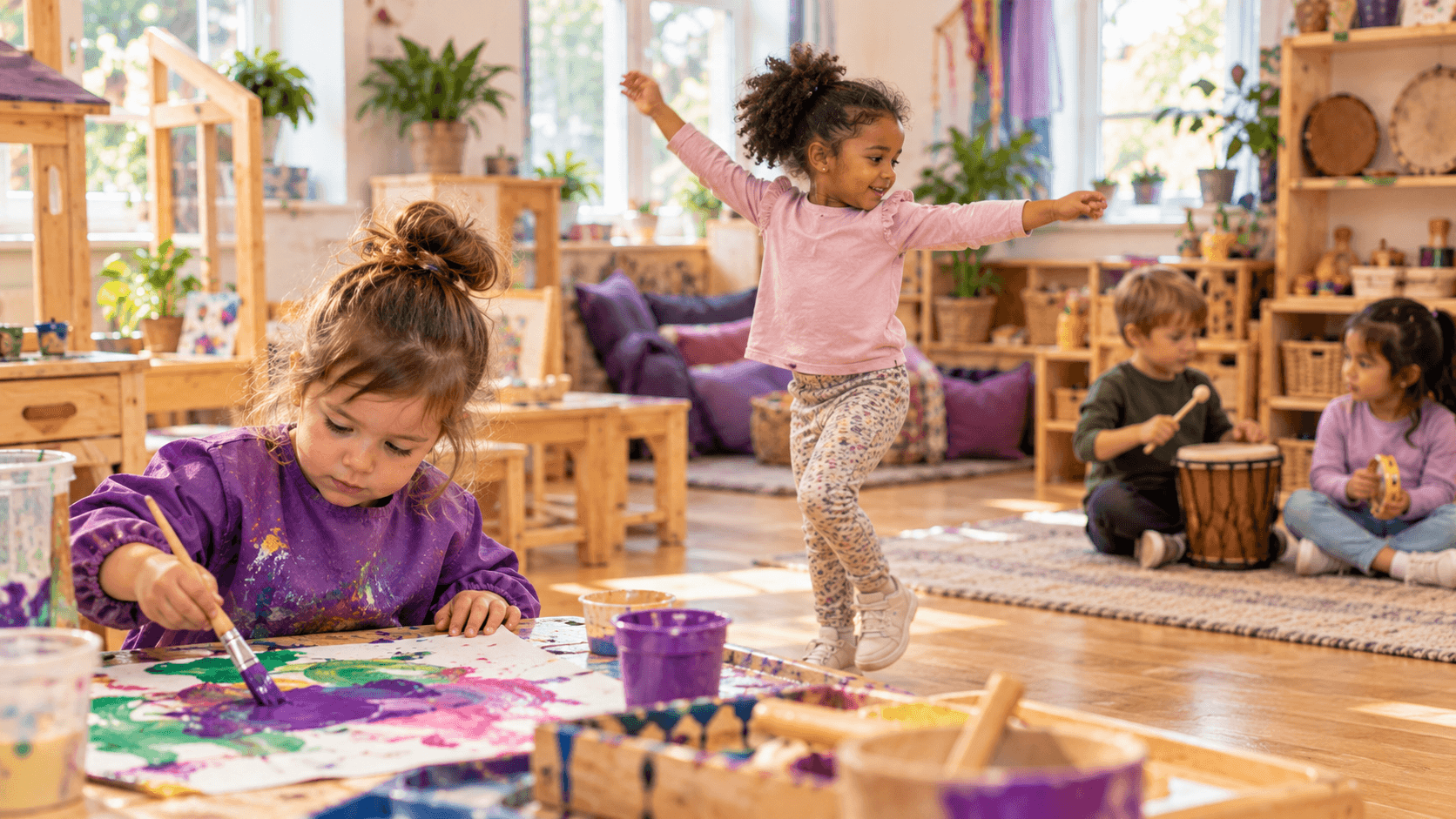
A child making a picture may decide to cover part of it and begin again. In music, someone may propose a slower rhythm or stop playing to listen to what the others are doing. During movement, a child may find a way to join a group without copying every action. These choices can change the work, yet they are easily missed when our attention settles on the finished picture, the song performed for families or the sequence everyone managed to remember.
We should be careful, though, not to invent meanings for children's choices. A painted-over picture does not tell us how its maker felt. Silence during a song does not, by itself, tell us whether a child was engaged or uncomfortable. We can ask, observe over time and learn what different ways of taking part mean for this child in this setting.
That knowledge should affect what we offer. A child may need a quieter place to explore an instrument before joining a group. Another may want to design the scenery and later decide to perform. We cannot assume that a child's contribution must become more public to become more valuable.
What would we change next time?
After a familiar creative experience, a team could choose one moment when events did not follow the plan. Reconstruct what happened together: what did a child propose, how did the others respond, and what did the adult do?
Then decide what the children might need next. If the idea was promising but there was no time to explore it, could the materials remain available tomorrow? If one child's suggestions usually determine the game, how might the adult help others contribute? If a new idea disrupted a group agreement, could the children try both versions before deciding?
The point is not to praise every unexpected suggestion. It is to understand our response and see whether another one would help children think, make and negotiate together. The next observation tells us more than a general statement that we value creativity.
Leaders can make room for these conversations. Staff need time to revisit an experience and the confidence to say, “I wasn't sure what to do”. A plan can be carefully prepared and still leave room for what children bring to it.
What the audience cannot see
By the day of the performance, the tree may stand quietly at the side of the stage. It may move across the path. The audience will not know which ideas were tried and left behind.
The children and the educators will know something more about the work than its final version can show. They will know who proposed a change, how the group responded and what they decided to make together.
That part of the experience deserves our attention. A performance gives children something to share. Creative expression gives them a part in deciding what is worth sharing.
Further Reading
These sources shaped the thinking behind this piece on creativity in early years:
- Department for Education (2023). Development Matters.
- Ofsted (2024). Best Start in Life Part 3 - The 4 Specific Areas of Learning.
- Cooper, J. (2016). Integrating Music, Drama, and Dance Helps Children Explore and Learn.
- OECD (2021). Starting Strong VI: Supporting Meaningful Interactions in Early Childhood Education and Care.
Ready to Build Creativity in Early Years Across Your Setting?
Helping practitioners notice and respond to moments like the moving tree, rather than simply correct them, takes confidence and the right training. Our government-funded childcare courses cover expressive arts and design, reflective practice and child-led learning, so your whole team feels confident spotting creativity in early years as it happens, not only managing it. Building creativity in early years into daily practice starts with the people in the room. Call us on 0800 002 9242 or get in touch with our friendly team today.

Discover more: About Anabela Paulo
Other Articles:
Workforce Challenges and invisible inclusion
The Key To Inclusive Education In Early Years
Inclusion in Early Years – What is it?
