
Celebrating Diwali in Nursery: A Festival of Lights Guide for 2026
Celebrating Diwali in nursery settings gives even the youngest children a joyful window into one of the world's biggest festivals. In 2026, the main day falls on Sunday 8 November, with the wider 5-day celebration running from Dhanteras on 6 November to Bhai Dooj on 10 November. For many Hindu, Sikh and Jain families connected to your setting, it ranks among the most important dates of the year.
When is Diwali in 2026?
Diwali follows the lunar calendar, so the date shifts each year. In 2026, the main Lakshmi Puja falls on Sunday 8 November. The wider festival stretches across 5 days: Dhanteras on 6 November marks the start of celebrations, the main day of lights follows on 8 November, and the festival closes with Bhai Dooj on 10 November, a day that celebrates the bond between brothers and sisters.
Because the main day lands on a Sunday this year, many temples and community groups are expected to hold their largest public gatherings that weekend, which is also Remembrance Sunday. Diwali is not a public holiday in the UK, but its visibility has grown considerably, from large public celebrations in London's Trafalgar Square to Leicester's famous Golden Mile on Belgrave Road, one of the biggest Diwali celebrations outside India.
The story behind the festival of lights
Across every tradition that marks it, Diwali centres on the same idea: light overcoming darkness, good overcoming evil, and knowledge overcoming ignorance. For many Hindu families, the most widely told story is Rama's return to Ayodhya after 14 years in exile, following his victory over the demon king Ravana. Local people are said to have lit oil lamps, or diyas, to welcome him home, giving the festival its name: Deepavali, meaning a row of lights.
Diwali also carries deep meaning for Sikh and Jain communities, each rooted in its own history. Sikhs mark Bandi Chhor Divas around the same time, commemorating the release of Guru Hargobind Ji from imprisonment. Jain communities associate the festival with the anniversary of Lord Mahavira's attainment of nirvana. Recognising this range, rather than flattening it into a single story, helps children see the festival as one shared by several distinct communities.
Why celebrating Diwali in nursery supports the EYFS
Festivals like Diwali sit naturally within the EYFS area of Understanding the World, specifically the strand covering people, culture and communities. Children build a sense of belonging when they see their own family's traditions reflected at nursery, and they build respect for others when they learn about traditions different from their own. You can find the full details of this learning area in the EYFS statutory framework on GOV.UK.
Celebrating Diwali in nursery: simple activities for early years
A few well-chosen activities bring the festival to life without overcomplicating your planning.
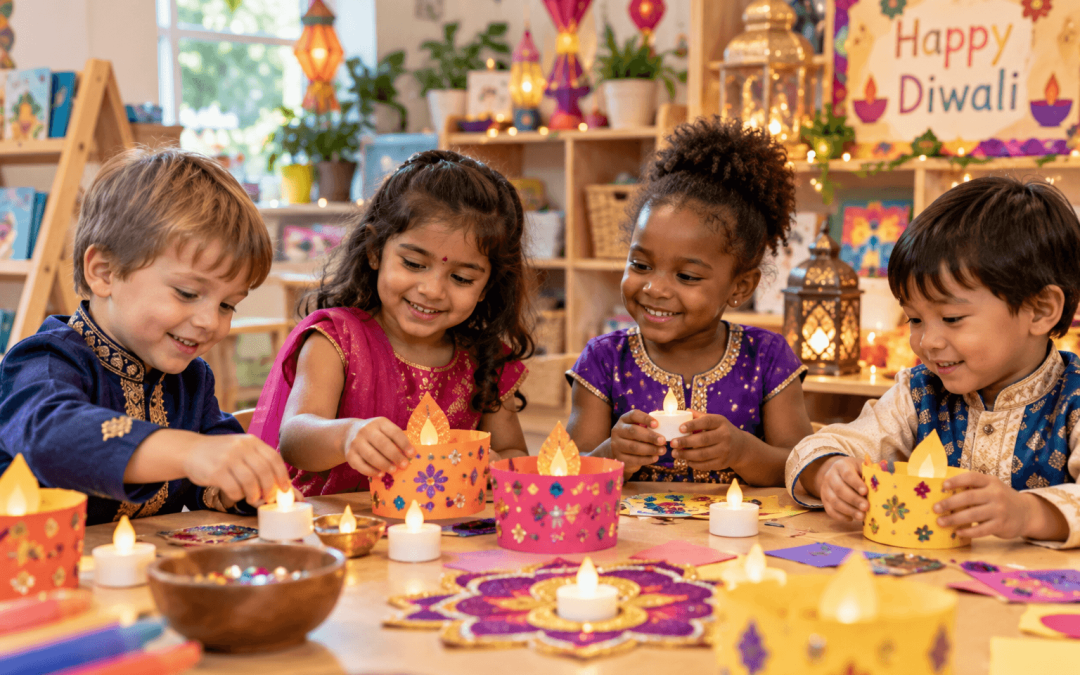
- Diya and lantern craft. Decorate card lanterns and use battery-powered tea lights rather than real flames, so even your youngest children can join in safely.
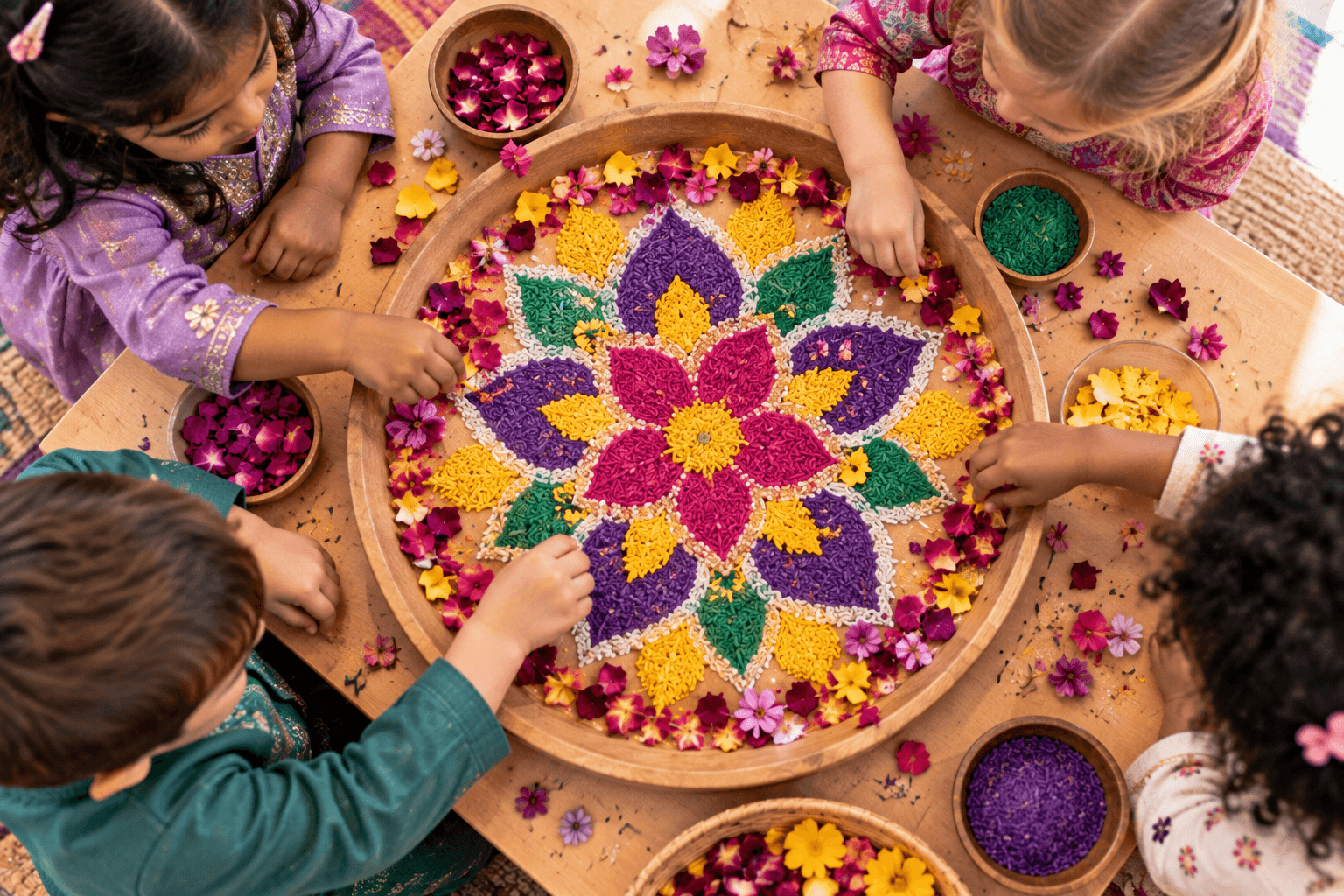
- Rangoli patterns. Use coloured rice, dried petals or pasta shapes to create doorstep-style patterns on large sheets of paper or trays.
- Share a simplified version of the Rama and Sita story, told through pictures and puppets for younger age groups.
- Trying traditional sweets. Check allergies carefully before offering any food, and consider inviting a parent to bring in something to share.
- Music and movement. A short session of Bollywood-inspired music gives children a joyful, physical way to join the celebration.
Working with the whole family, not just one day
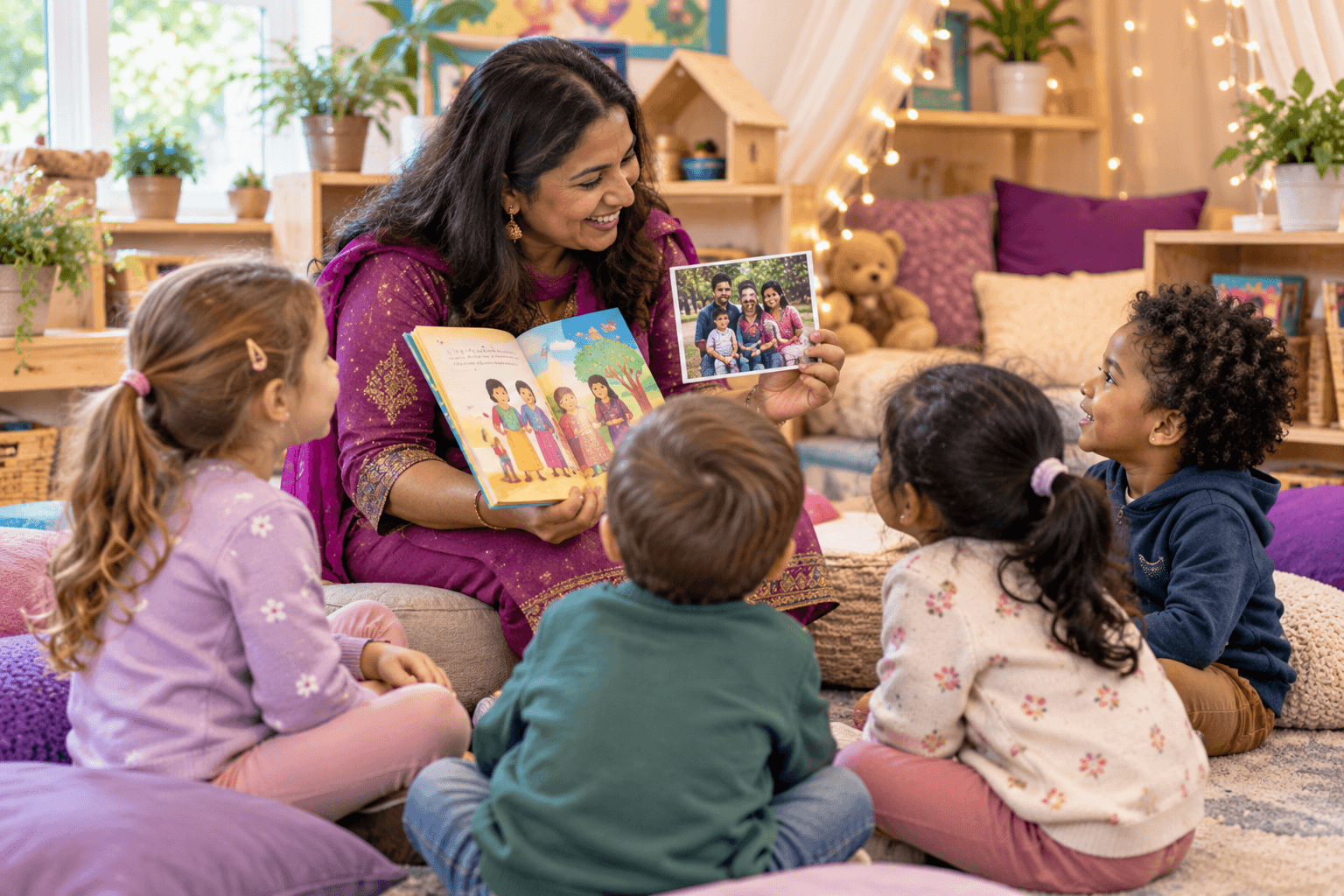
When celebrating Diwali in nursery, some of your most valuable content will come from the families in your setting, not from a lesson plan. Invite parents who celebrate to share a story, a photograph, or a simple recipe. This keeps the festival grounded in real experience rather than turning it into a one-off, tokenistic activity disconnected from the rest of your curriculum. Not every Hindu, Sikh or Jain family marks Diwali the same way, so ask rather than assume, and let families guide how much they would like to share.
Keeping activities safe and inclusive
A few practical checks keep the celebration enjoyable for everyone.
- Confirm allergy information before any shared food goes near children.
- Choose battery-operated lights over real candles or diyas around young children.
- Remember that some families may prefer not to take part at all, for reasons of their own faith or background.
- Offer a quiet alternative activity alongside the main celebration to keep the week welcoming for every child in the room.
- Fireworks and loud celebrations often continue into the evening around Diwali, so it is worth mentioning to parents that some children may arrive at nursery a little tired, or more sensitive to noise, in the days that follow.
A few simple words for your team
A handful of key words help practitioners talk about Diwali with confidence, and give children new vocabulary to take home.
- Diya refers to the small oil lamp lit throughout the festival.
- Rangoli describes the colourful floor patterns made near doorways to welcome guests.
- Deepavali, often shortened to Diwali, translates as a row of lights.
Introducing these words alongside the English translation, rather than skipping past them, shows children that other languages and traditions are worth learning properly, not just observing from a distance.
Making Diwali part of a bigger celebration of culture
Celebrating Diwali in nursery settings works best as one thread in a much larger conversation about culture and community that runs all year, rather than a single day marked on the calendar and then forgotten. The same curiosity and respect you build this November can carry through to Eid, Chinese New Year, Christmas and every other celebration your children bring through the door. For more seasonal inspiration, visit the Parenta blog or browse our free How To Guides for further planning ideas throughout the year.
Would your team like support planning meaningful, well-paced cultural activities across the year? Our childcare courses cover the EYFS Understanding the World strand in depth. Get in touch with our friendly team or call us on 0800 002 9242 to find out more.
