
STEM in Early Years: How Imagination Can Boost Learning
What if creativity comes before STEM in early years?
Look around your setting for a moment.
The chair you are sitting on. The clothes you are wearing. The phone in your hand. The lights above you. The building around you.
None of them began with a calculation.
They began with an idea.
Someone imagined something that didn't exist yet.
Where Does STEM in Early Years Really Begin?
Think about the world imagined in Star Trek…
Communicators that look remarkably like the mobile phones we later carried in our pockets, talking to computers, video calls, automatic doors and devices that could translate languages.
Someone dared to imagine a future that didn't yet exist and ask:
“What if…?”
And isn't that where innovation begins?
Science, technology, engineering and mathematics may eventually provide the tools to turn an idea into reality - but first we need the imagination to see beyond what already exists.
Before we can invent the future, someone has to imagine it.
So perhaps instead of asking how we introduce STEM to young children, we should be asking another question.
We should be asking whether we are protecting and developing the very skills that future scientists, engineers, mathematicians, designers and inventors will need.
Creativity and imagination.
We often talk about creativity as though it is something a child either possesses or doesn't: “She's so creative.” “He's got such a wonderful imagination.”
But creative thinking can be developed, practised and strengthened, and Early Years and KS1 are wonderful places for that to happen.
Creativity is much bigger than art
When we hear creativity, it is easy to think about painting, drawing and making. But creativity is much bigger than producing something to take home.
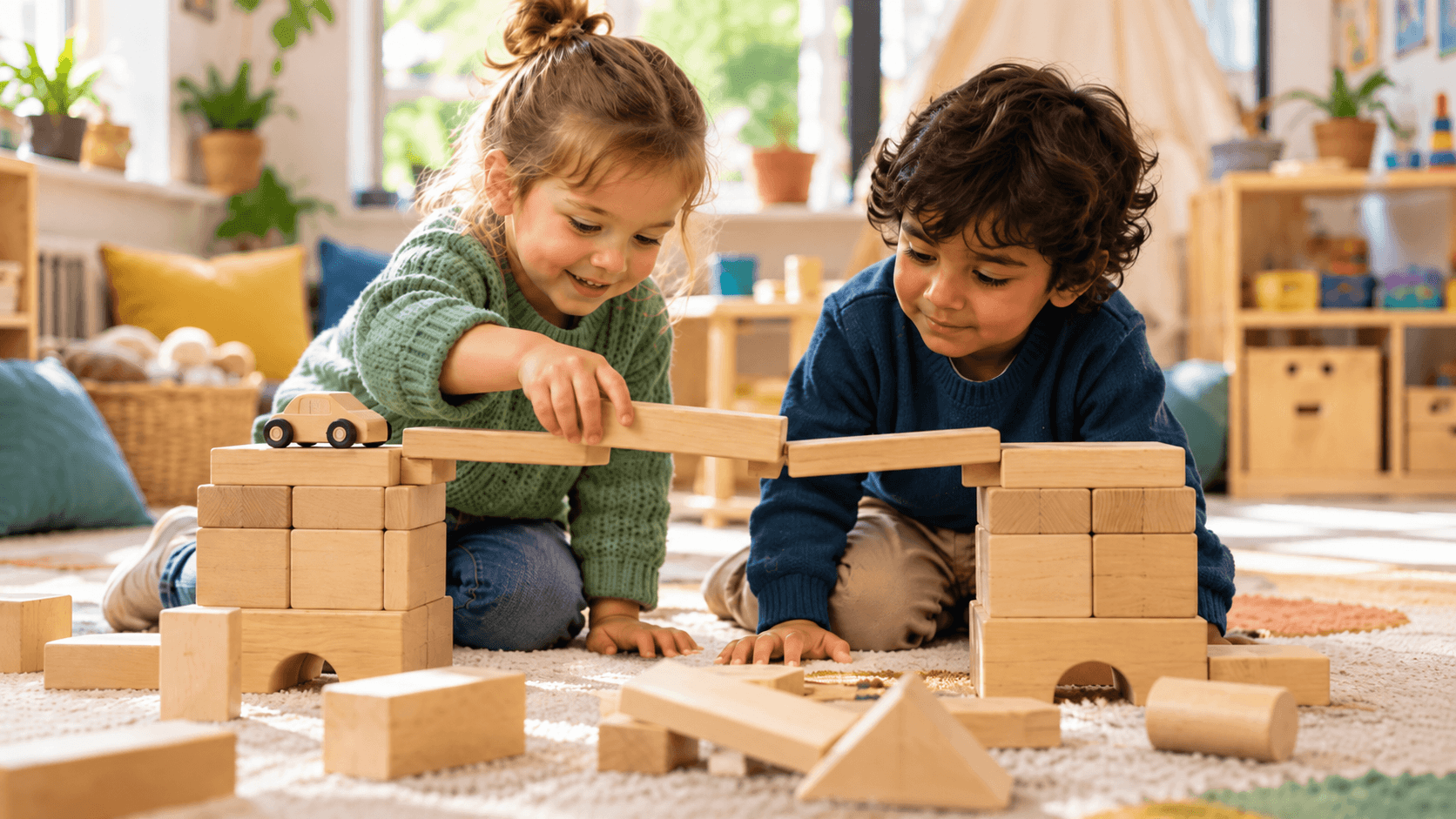
Imagine a child trying to build a bridge for their toy:
The bridge collapses.
What happens next?
Perhaps they add another block. Make the bridge wider. Another child suggests a completely different solution.
They count blocks, compare sizes, explore balance and weight, negotiate, communicate, problem-solve and try again.
Suddenly we have engineering, mathematics, science, language and collaboration happening within one playful experience.
Nobody needed to announce, “Today we are learning STEM.”
The children are solving a problem that matters to them.
The power of “What if?”
There is a tiny question I think we should hear much more often: “What if…?”
What if we put this here?
What if the dinosaur was enormous?
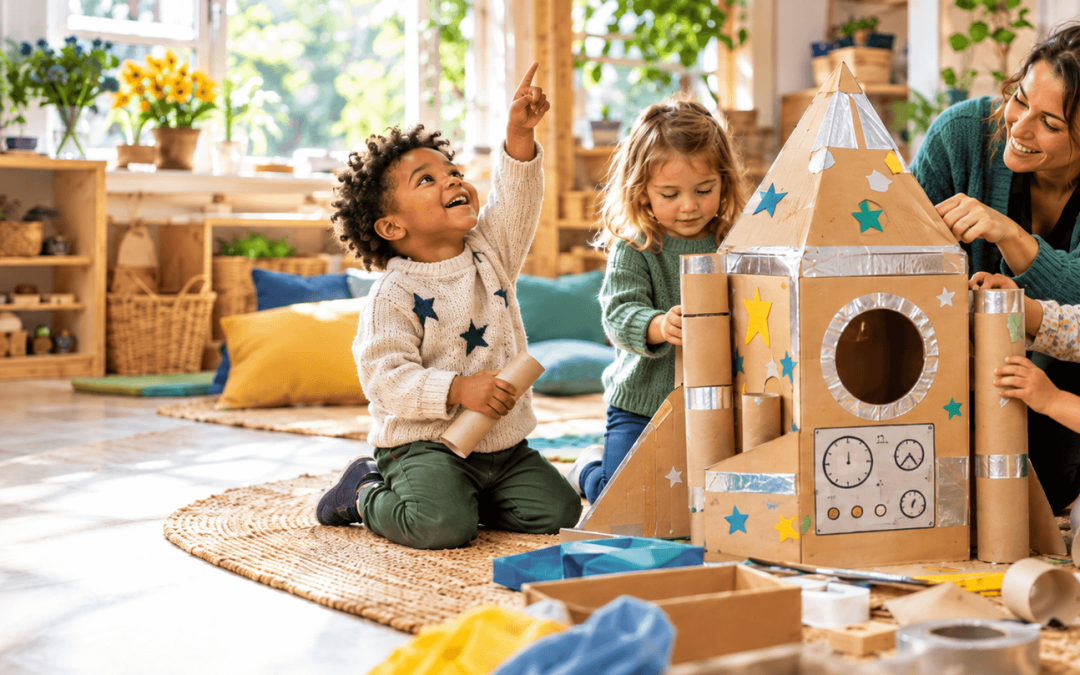
What if our spaceship had no wings?
What if we try it another way?
Those two little words open the door to possibility.
And isn't that at the heart of scientific thinking too?
Imagine. Explore. Create. Test. Change. Try again.
There is something else developing here too.
Resilience.
When children create from their own imagination, there isn't always an answer to copy. The tower falls. The bridge won't hold their toy. Their idea simply doesn't work.
So they rethink. Rebuild. Adapt. Ask for help. Try something different. Sometimes they start again.
Creativity gives children opportunities to discover that “It didn't work” doesn't mean “I can't do it.” It means “What could I try next?”
Sometimes the wonky bridge that collapsed three times before finally standing is far more valuable than the perfect bridge an adult helped to build.
The process matters more than the perfect result.
Creativity brings language to life
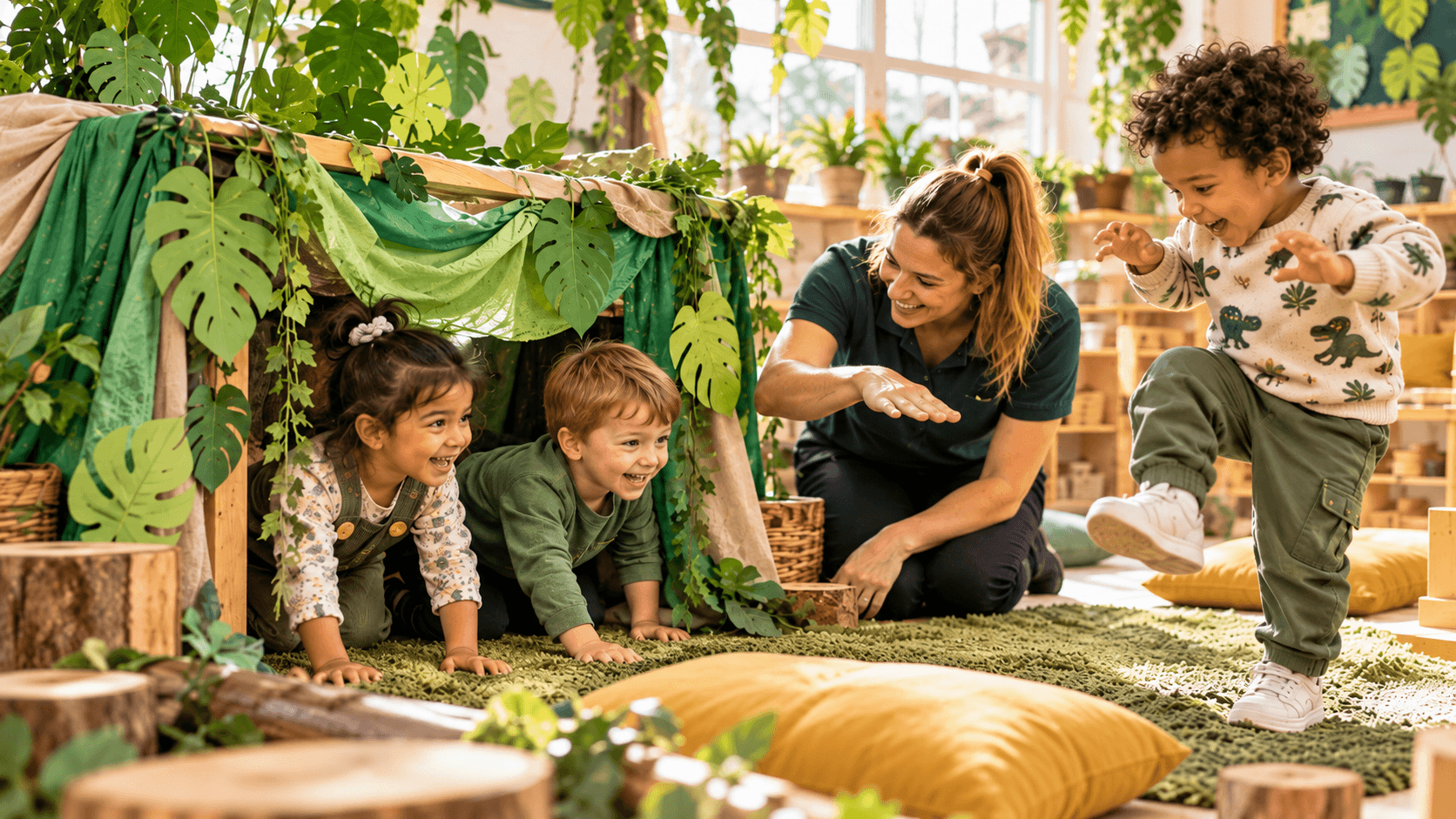
Imagine children travelling through an imaginary rain forest.
Suddenly words such as enormous, tangled, slippery, crawling, underneath, above and quietly have a purpose.
Children can hear them, move them, act them and begin to own them.
A child can physically crawl under something before being expected to explain what under means. They can make their body enormous or tiny, stomp heavily or tiptoe quietly.
Language isn't simply being delivered. It is being experienced.
For children developing communication and language, including those with SEND or EAL, creative experiences can provide another route into understanding. Children can show us what they know through movement, play, gesture, sound and the choices they make.
Are we accidentally removing creativity?
If every child receives the same materials, sees the same finished example and is expected to produce something similar, they may be using art materials.
The question remains however, how much creative thinking are they doing?
Sometimes we need to resist providing the answer too quickly.
Instead of “Put this here,” ask, “Where could it go?”
Instead of “That won't work,” ask, “What do you think might happen?”
Instead of showing the solution, ask, “What else could you try?”
Our role is knowing when to guide, when to wonder alongside children and when to give them enough space to discover and create something themselves.
“But I'm not creative!”
I hear educators say this too.
Being a creative educator doesn't mean being brilliant at art, playing an instrument or producing amazing displays.
Our creativity can be developed too.
Instead of asking, “How am I going to teach this?” try:
“How could the children experience this?”
Could we move it?
Act it?
Build it?
Sing it?
Tell a story around it?
Take it outside?
Turn it into a problem to solve?
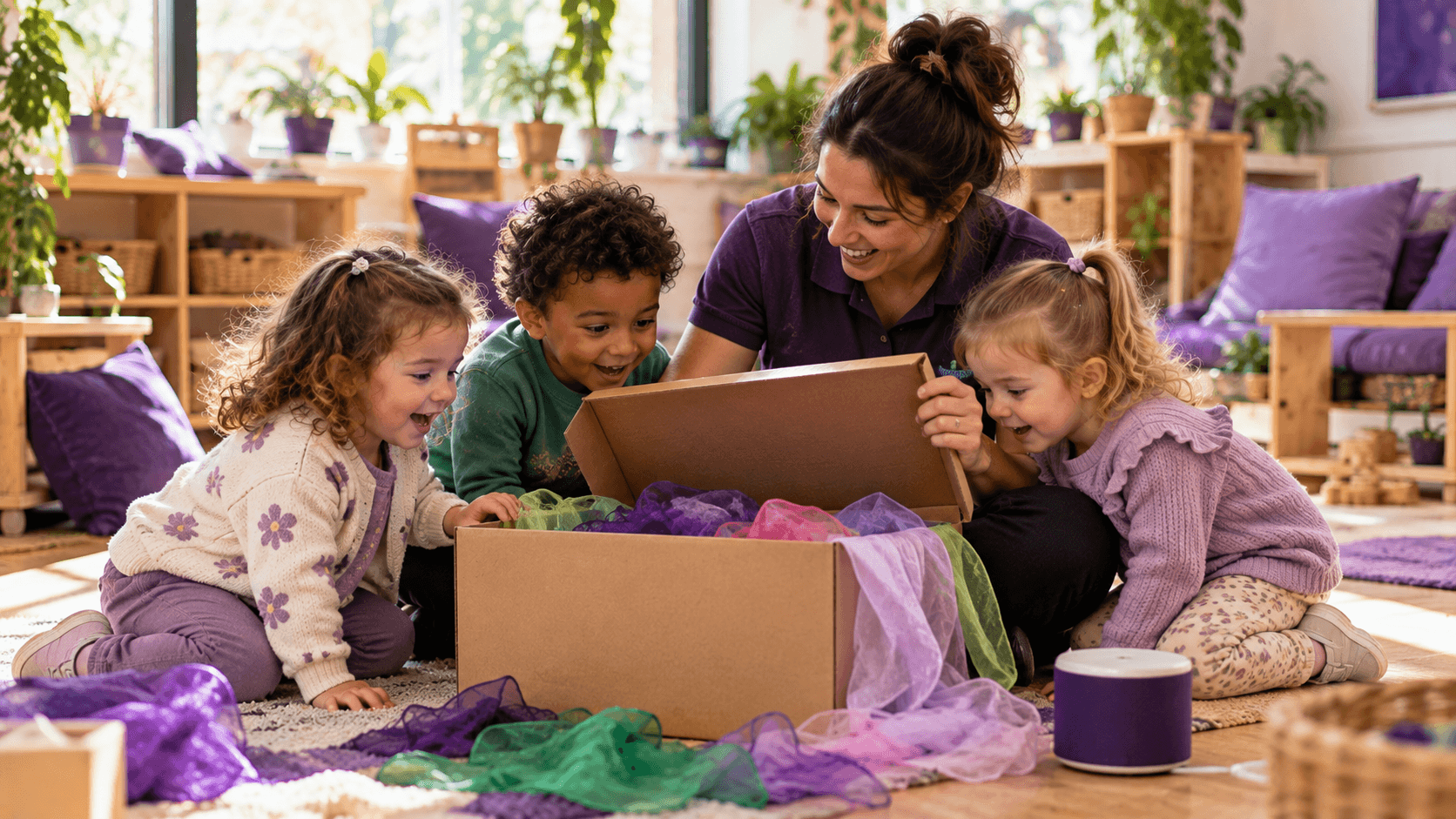
You don't need expensive resources. Sometimes you need a cardboard box, a piece of fabric, some music and an adult willing to say:
“I've got an idea… shall we see what happens?”
And “I don't know. How could we find out?” can be one of the most powerful things an educator says.
The Arts
Finally, music, movement, dance, storytelling and art aren't important simply because they support STEM, maths or language.
They are part of being human.
Across all cultures and generations, humans have sung, danced, painted, made music and told stories to communicate, celebrate, connect and make sense of our world.
A child should be able to dance because dancing feels wonderful. Sing because they love singing. Paint because they have something to express. Become a dragon, astronaut or tiny ant simply because their imagination allows them to.
The arts don't just help children learn about the world. They give children ways to experience, express and belong within it.
The scientists, engineers, artists, storytellers, musicians and innovators of tomorrow are in our settings and classrooms today.
Making Room for Creativity and STEM in Early Years
And I know what many educators may be thinking:
“How am I supposed to fit creativity into an already jam-packed day?”
But perhaps that is the point. Creativity doesn't have to be another thing to fit in. It can be the way we bring the learning we already need to do to life.
It can turn new vocabulary into something children can move, feel and experience. It can turn maths into a problem that needs solving, science into a question that needs exploring and a story into a world children can step inside.
Creativity can help us make learning more meaningful, memorable and engaging, while giving children opportunities to imagine, communicate, problem-solve, persevere and think for themselves.
So perhaps we don't need to ask, “Where will I find the time for creativity?”
Perhaps we need to ask:
“How could creativity help me bring today's learning to life?”
Because creativity isn't one more thing to teach. It can be the way we teach.
How Parenta Supports Creative STEM in Early Years
Gina's message is a powerful reminder that STEM in early years doesn't start with worksheets or flashcards. It starts with curious children, playful questions and confident educators who know when to step back and wonder alongside them. The EYFS statutory framework reflects this too. It names creating and thinking critically as one of the characteristics of effective learning, with Expressive Arts and Design as a specific area of learning.
At Parenta, we help early years teams build exactly these skills. Our government-funded childcare courses support practitioners at every stage, from new starters to room leaders and managers. Your team will learn to plan rich, child-led experiences that bring STEM in early years to life through play, language, movement and the arts.
If you're thinking about training your team, every apprenticeship we deliver in 2026 comes at no cost to your setting. Plus, when you enrol 1 apprentice, you'll receive a FREE Level 3 SEND Coordinator Award. It's ideal for supporting children who are developing communication and language, including those with SEND or EAL.
Looking for more practical ideas for STEM in early years? You'll find plenty more inspiration from sector experts on the Parenta blog.
Bring More "What If...?" Moments to Your Setting
Ready to grow a more creative, confident team? Get in touch with our friendly team today or call us on 0800 002 9242, and we'll help you find the right childcare course for every member of your team.
Now, we'd love to hear from you. What's the best "What if...?" moment you've seen in your setting this term? Share this article with your team and tell us how you're bringing creativity and STEM in early years together by tagging Parenta on social media.

Discover more: About Gina Bale
Other Articles:
4 Simple Movements That Shape a Child’s Whole Future
The Social Power of Play
Playful STEM: Spark Creativity in Early Years
The importance of not having a narrow view of imagination and authentic learning
What is Creativity in Early Childhood? Definitions & Real-World Examples
Imaginative Play: A Proven Path to Emotional Well-being
